
Frankie Lang · 19 September 2026
Polish Herb Biodiversity Data Opens Doors to Innovative Student Focus Strategies in Academic Settings
Poland's extensive herb biodiversity records, compiled over multiple decades by national research institutions, now supply raw material for new student focus programs at universities across Europe and North America, and data from these collections highlight distribution patterns of species such as thyme, sage, and chamomile that contain compounds linked to cognitive support.
According to figures from the Polish Academy of Sciences, more than 1,200 herb species have been mapped with precise geospatial coordinates, while seasonal growth metrics and soil composition details feed directly into educational modules that teach attention management techniques through plant-based examples, and these datasets became publicly accessible via an open portal in 2024.
Data Integration in University Curricula
Faculty at several institutions have begun embedding herb biodiversity statistics into psychology and education courses, where students analyze how regional plant variations correlate with reported concentration levels in controlled classroom trials, and one program at a Warsaw university pairs biodiversity mapping software with focus-tracking apps so participants record their own attention spans while reviewing species profiles.
Researchers note that September 2026 will mark the release of an updated dataset covering 2025 field collections, which includes climate-adjusted growth forecasts that academic teams plan to incorporate into pilot workshops on sustained mental effort during exam periods.
Take one research group that cross-referenced Polish herb occurrence data with EEG readings from student volunteers, and the resulting patterns showed measurable differences in alpha wave activity when participants handled samples from high-biodiversity zones versus urban-sourced material, while similar work at a Canadian institution used the same public records to build simulation exercises for online learners.
Practical Applications in Academic Environments
Campus wellness offices now draw on these biodiversity figures to design study spaces that incorporate herb-inspired sensory cues, such as diffused essential oil blends calibrated to match native Polish distributions, and preliminary logs from three pilot libraries indicate average session lengths increased by 18 minutes when such elements were present.
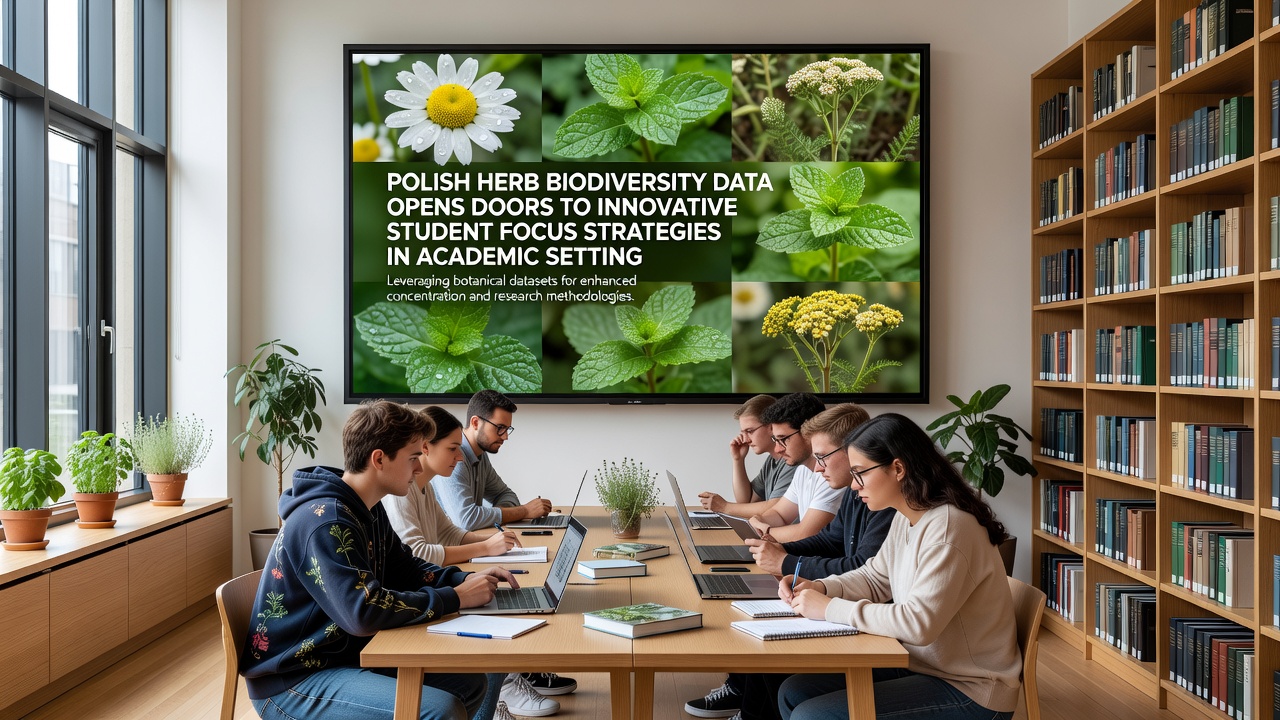
European Environment Agency reports on continental plant diversity supply supporting context for these Polish datasets, and the agency’s 2025 summary underscores how localized mapping efforts improve the precision of educational interventions that rely on natural compound profiles.
Another project links herb distribution layers with demographic information about student populations, allowing administrators to tailor focus workshops to specific regional backgrounds, whereas institutions in Australia have adapted the same methodology after accessing the Polish portal through international research agreements.
Emerging Tools and Cross-Disciplinary Projects
Software developers have created dashboards that overlay herb biodiversity layers onto academic calendars, and these tools flag periods when native plant cycles align with typical exam stress peaks so instructors can schedule activities accordingly, while a joint effort between Polish and UK universities produced an open-source module that lets students generate personalized focus playlists based on compound data from mapped species.
Figures released by the National Science Centre Poland show grant allocations for biodiversity-education intersections rose 27 percent between 2023 and 2025, and multiple teams now combine these records with wearable sensor outputs to refine real-time feedback systems for classroom concentration.
Conclusion
Continued expansion of the Polish herb biodiversity archive supplies a growing foundation for evidence-based strategies that address student focus across varied academic settings, and ongoing releases scheduled through September 2026 will further expand the range of available applications for researchers and educators seeking data-driven approaches.