
Avery Becker · 17 October 2026
Poland's Aromatic Plant Records Drive Innovative Student Focus Solutions in Higher Education
Poland maintains extensive records on its aromatic plant species, and those datasets have begun shaping new methods for supporting concentration among university students across the country. The information comes from long-term biodiversity surveys that track distribution, chemical profiles, and seasonal variations of plants such as thyme, rosemary, and chamomile, while institutions compile these details into accessible databases for academic use. Researchers at several Polish universities have started testing extracts and essential oils derived from these species in controlled campus environments, and early results show measurable changes in attention span during study sessions.
Mapping Aromatic Species Across Regions
National surveys conducted over the past decade have produced detailed maps of aromatic plant populations in forests, meadows, and agricultural margins, with particular attention given to chemical compound concentrations that influence cognitive response. Data collected by regional environmental agencies indicate that certain lowland areas yield higher levels of rosmarinic acid and other terpenes during late summer months, and this timing aligns with academic calendars that run through October. In October 2026, updated distribution layers were added to public portals, allowing educators to request region-specific plant materials for pilot programs at technical universities and liberal arts colleges alike.
These maps also record soil conditions and microclimate factors that affect oil potency, and agronomists have used the information to guide small-scale cultivation projects near student housing complexes. The approach avoids large commercial operations and instead emphasizes collaboration between botany departments and campus wellness centers, which then prepare standardized infusions or diffusers for library and dormitory spaces.
Translating Plant Data Into Practical Aids
University laboratories have converted the chemical profiles into dosage guidelines for non-pharmaceutical concentration supports, such as timed-release herbal sachets placed in study carrels or low-intensity aroma diffusers programmed to activate during evening review periods. Studies coordinated by the Polish Academy of Sciences have measured alpha-wave activity in participants exposed to these preparations, and figures reveal modest but consistent improvements in sustained attention tasks compared with control groups. The protocols remain voluntary, and participating students report usage patterns through anonymous digital logs that feed back into the same databases for further refinement.
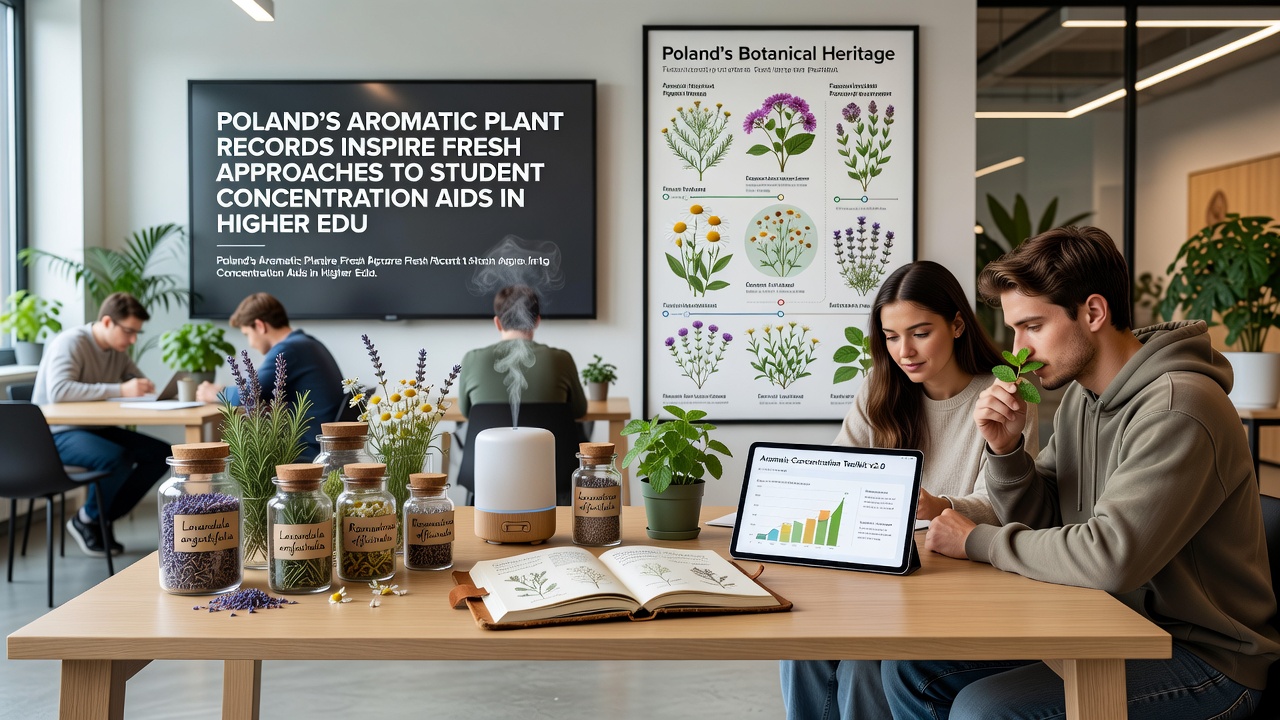
One program at a major technical university in Silesia combined the plant records with wearable attention trackers, and the resulting dataset showed that rosemary-based diffusers correlated with fewer interruptions during problem-solving exercises. Another trial at a Warsaw humanities faculty focused on chamomile varieties harvested from recorded highland sites, and participants noted steadier focus during long reading assignments. These projects operate under ethics board oversight that requires clear labeling of ingredients and regular review of any reported sensitivities.
Integration With Broader Academic Support Systems
Polish higher education administrators have begun incorporating the aromatic plant findings into existing student success frameworks, and the European Environment Agency has referenced similar biodiversity datasets when discussing cross-border knowledge exchange on natural cognitive supports. Training sessions for academic advisors now include modules on matching specific plant profiles to different study demands, such as high-intensity exam preparation versus creative writing workshops. The records also supply traceability information that lets institutions verify the origin and processing standards of every batch used on campus.
International partners have taken note of the Polish model, and a research group at the University of Melbourne has requested access to the open data layers for comparative analysis with Australian native aromatic species. Meanwhile, Canadian health agencies have cited the Polish trials in background papers on non-stimulant focus aids, highlighting the emphasis on documented regional sourcing rather than imported commercial extracts.
Future Data Releases and Campus Expansion
Additional releases scheduled for 2027 will include genetic markers for selected aromatic populations, and these markers are expected to support more precise selection of plants for indoor cultivation under LED lighting systems already present in many university greenhouses. Campus planners anticipate scaling the diffuser networks to include lecture halls and computer labs, while maintaining teh same data-driven calibration that tracks both plant chemistry and student usage metrics. The open nature of the original records allows independent verification and encourages replication at smaller institutions that lack dedicated botany staff.
Conclusion
Poland's aromatic plant records continue to supply the factual foundation for concentration support programs that operate within higher education settings. The combination of mapped distributions, chemical analyses, and campus trials produces a growing body of evidence that institutions can apply without reliance on external commercial suppliers. As new data layers appear and more universities adopt the protocols, the connection between regional flora documentation and student academic routines becomes increasingly direct and measurable.