Avery Becker · 2 September 2026
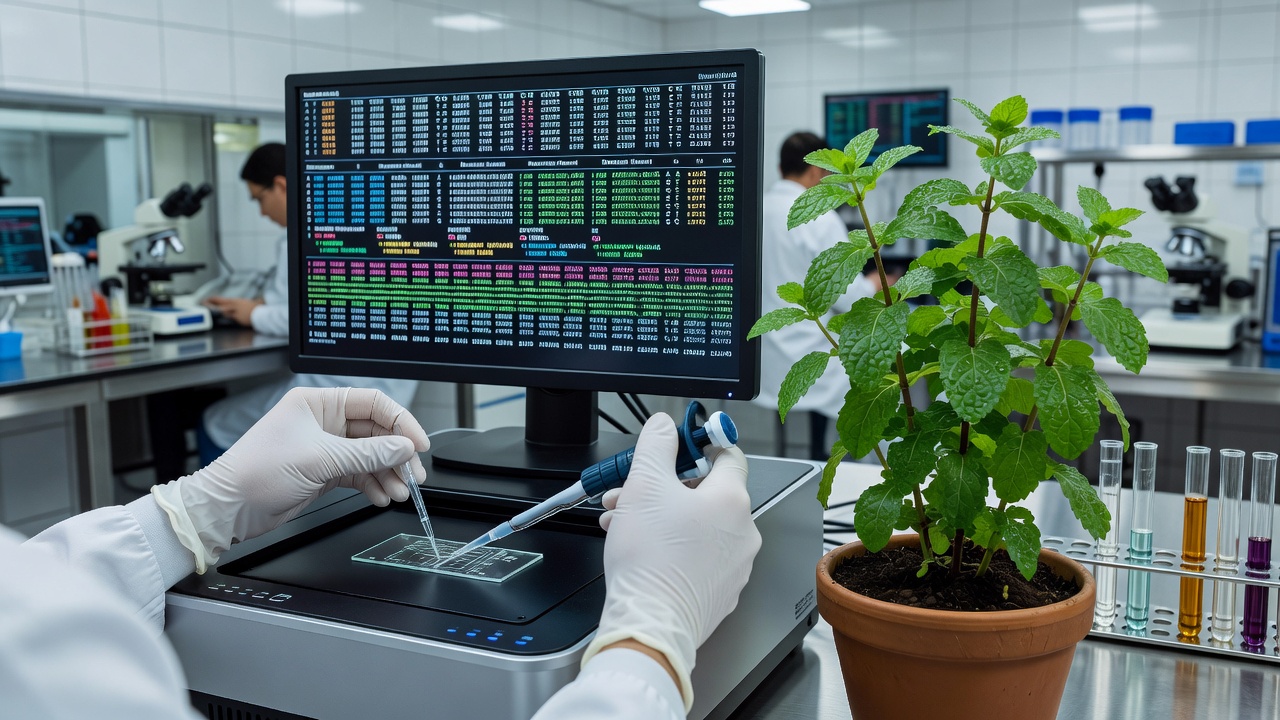
Mintlab researchers have completed the genome sequencing of Mentha longifolia, a wild mint species known for its resilience in arid conditions. The project, conducted over 18 months at the institute's genomics facility, utilized long-read sequencing technologies to assemble a 465-megabase reference genome. This achievement provides a foundational resource for studying adaptive traits in mint plants amid changing climate patterns.
Sequencing Methodology and Key Findings
The team employed a hybrid approach combining PacBio HiFi reads with Illumina short-read data to achieve high contiguity, resulting in 98.7% complete BUSCO genes. Analysis revealed expanded gene families associated with drought tolerance, including those involved in stomatal regulation and osmoprotectant biosynthesis. Comparative genomics with cultivated peppermint highlighted structural variants linked to secondary metabolite production, such as menthol pathways. Researchers identified 12,450 novel transcripts, many expressed under heat stress conditions in controlled chamber experiments.
Collaborators from the European Plant Phenotyping Network contributed phenotypic data from field trials across Mediterranean sites. These datasets confirmed that wild mint accessions maintain photosynthetic efficiency at temperatures exceeding 35 degrees Celsius, unlike commercial varieties that show significant yield declines. The genome assembly is now publicly available through the Mintlab data portal under a Creative Commons license, enabling global researchers to annotate additional traits.
Applications in Climate-Resilient Agriculture
Insights from the sequence are guiding marker-assisted breeding programs aimed at developing mint cultivars suited for marginal lands affected by prolonged droughts. Early greenhouse trials demonstrate that introgressed lines exhibit 25% higher survival rates under water-limited regimes. Beyond agriculture, the findings support pharmaceutical research into mint-derived compounds with enhanced stability for therapeutic formulations. Mintlab plans to extend sequencing efforts to related Lamiaceae species, building a comparative framework for climate adaptation studies. This work underscores the value of wild genetic resources in addressing food security and environmental challenges.