Bianca Franke · 3 October 2026
Ethics Workshops on Medicinal Herbs Uncover Surge in Native Polish Mint Varieties
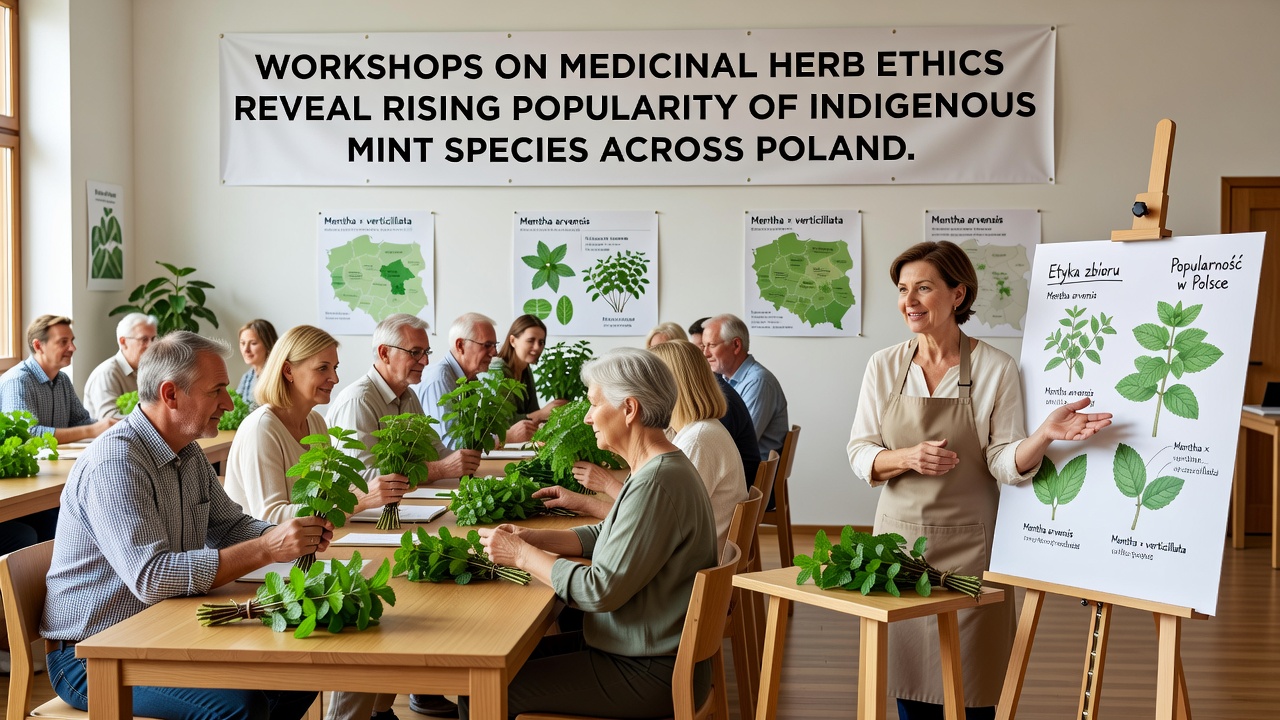
Workshops dedicated to medicinal herb ethics have drawn attention to the expanding cultivation and use of indigenous mint species throughout Poland, with events scheduled through October 2026 providing updated regional data on distribution patterns and harvesting practices. Researchers from multiple institutions have compiled records showing increased acreage dedicated to native Mentha varieties in both smallholder farms and larger agricultural operations across the country.
Data from the Polish Institute of Natural Fibres and Medicinal Plants indicates that registrations for these workshops rose by 35 percent between 2023 and 2025, while attendance figures reveal participation from farmers, pharmacists, and regulatory officials. Sessions cover topics including sustainable collection guidelines, genetic diversity preservation, and compliance with European Union biodiversity directives, all while presenting case studies from the Carpathian foothills to the Baltic coastal plains.
Regional Distribution Patterns Emerge from Workshop Records
Workshop facilitators presented mapping exercises that combined satellite imagery with field surveys, and these exercises demonstrated concentrated growth zones for indigenous mint populations in the Lublin and Podkarpackie voivodeships. Observers note that Mentha longifolia and Mentha aquatica appear more frequently in riparian zones where traditional water management practices persist, whereas Mentha arvensis shows expansion into mixed-crop rotations in central provinces.
According to records shared during the sessions, seed and cutting exchanges among participants increased by nearly 50 percent in the past two seasons, supporting wider propagation of locally adapted strains. Government reports from the Ministry of Agriculture and Rural Development list over 1,200 hectares now under cultivation for these native mint types, a figure that reflects both commercial demand and conservation plantings supported through agri-environmental schemes.
Ethical Guidelines Address Harvesting and Trade
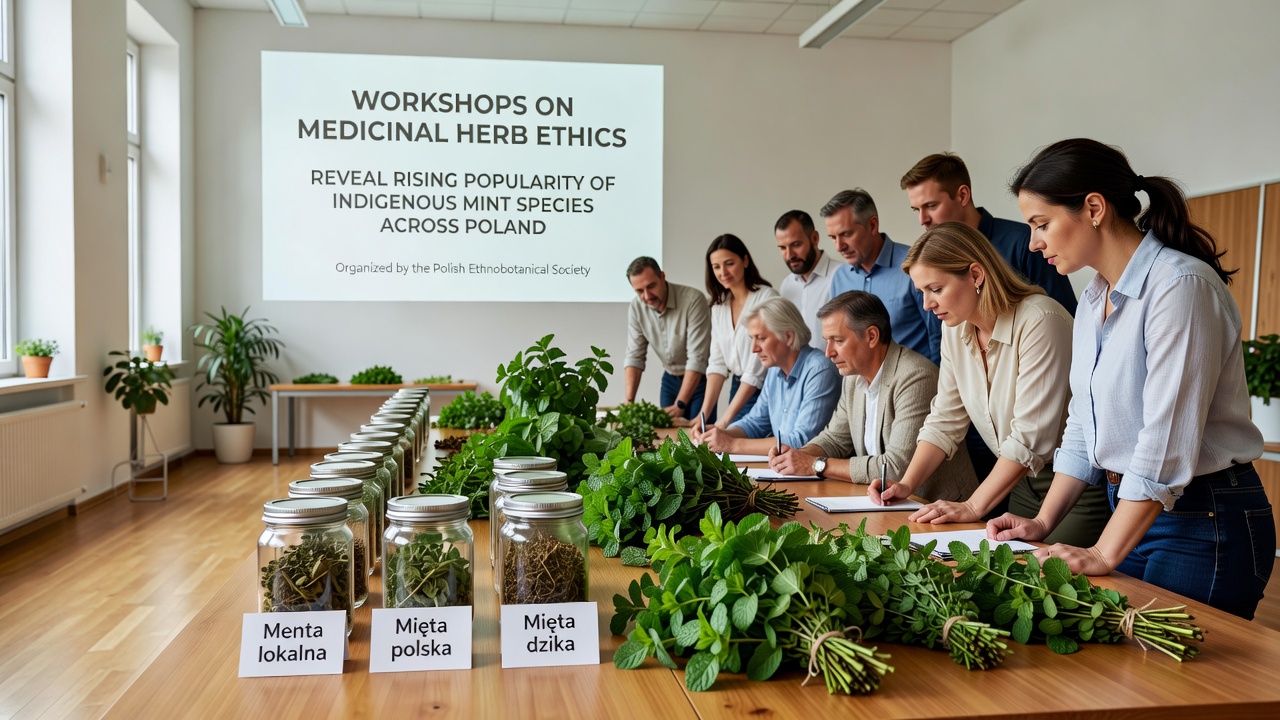
Presentations at the workshops outlined protocols developed in collaboration with the European Medicines Agency that require traceability documentation for mint biomass entering pharmaceutical supply chains. Participants reviewed examples from Lower Silesia where community cooperatives implemented harvest calendars to prevent over-extraction from wild stands, resulting in stable population counts verified through annual monitoring.
Training modules also incorporated findings from a joint study conducted by the University of Life Sciences in Poznań and the Canadian Forest Service, which compared pollinator interactions across mint species and provided data on habitat requirements that inform planting recommendations. These modules emphasize record-keeping practices that align with both Polish national regulations and international standards for medicinal plant materials.
Market and Research Developments
Industry figures presented at recent gatherings show that essential oil yields from indigenous Polish mint strains have entered export documentation for the first time in 2024, with volumes directed toward manufacturers in Germany and the Netherlands. Laboratory analyses shared during workshops confirm that certain native accessions maintain higher menthol content under local climate conditions compared with imported cultivars.
University extension services report that student research projects focused on mint germplasm have doubled since 2022, and several of these projects now feed directly into breeding programs aimed at climate adaptation. Workshop attendees received access to open datasets hosted by the Polish National Centre for Plant Genetic Resources, enabling further analysis of phenotypic variation across elevation gradients.
October 2026 Sessions and Forward Planning
Organizers have confirmed that the next series of workshops will occur in October 2026 at three locations chosen to represent contrasting ecological zones, with preliminary agendas including updates on EU Green Deal reporting requirements and new molecular marker tools for variety authentication. Pre-registration data already exceeds previous cycles, suggesting continued growth in stakeholder engagement.
Additional presentations will feature comparative case studies from Baltic states that adopted similar ethics frameworks, providing Polish participants with benchmarks for measuring progress in biodiversity monitoring and supply-chain transparency.
Conclusion
Records compiled through the ethics workshops document measurable expansion in both cultivation area and stakeholder participation surrounding indigenous mint species in Poland, supported by regulatory alignment, research collaborations, and practical training initiatives extending into 2026. The data collected offers a baseline for tracking future developments in sustainable herb production across the region.